
Disclaimer: This guide is meant as general information for climbers and doesn’t replace formal instruction. Always follow your gym’s safety policies, signage, and staff training.
Indoor Climbing Safety: Boulders and Ropes
Climbing will always involve some risk—but in a gym setting, there’s a lot you can do to stack the odds in your favor.
In this guide, we’ll cover the must‑know safety tips for bouldering and roped climbing in a gym setting so you can fall, belay, and communicate more confidently.
This article focuses on the two most common styles you’ll see in a climbing gym—bouldering and rope climbing—and walks through practical safety habits you can start using on your next session.
Boulder Safety Tips in the Gym
Whether you’re four feet or fourteen feet off the ground, a bouldering fall can go from ‘no big deal’ to a serious injury fast. Learning how to fall well gives you more confidence to try hard without putting your body at unnecessary risk. A few simple safety habits go a long way toward preventing accidents.
Falling Safely
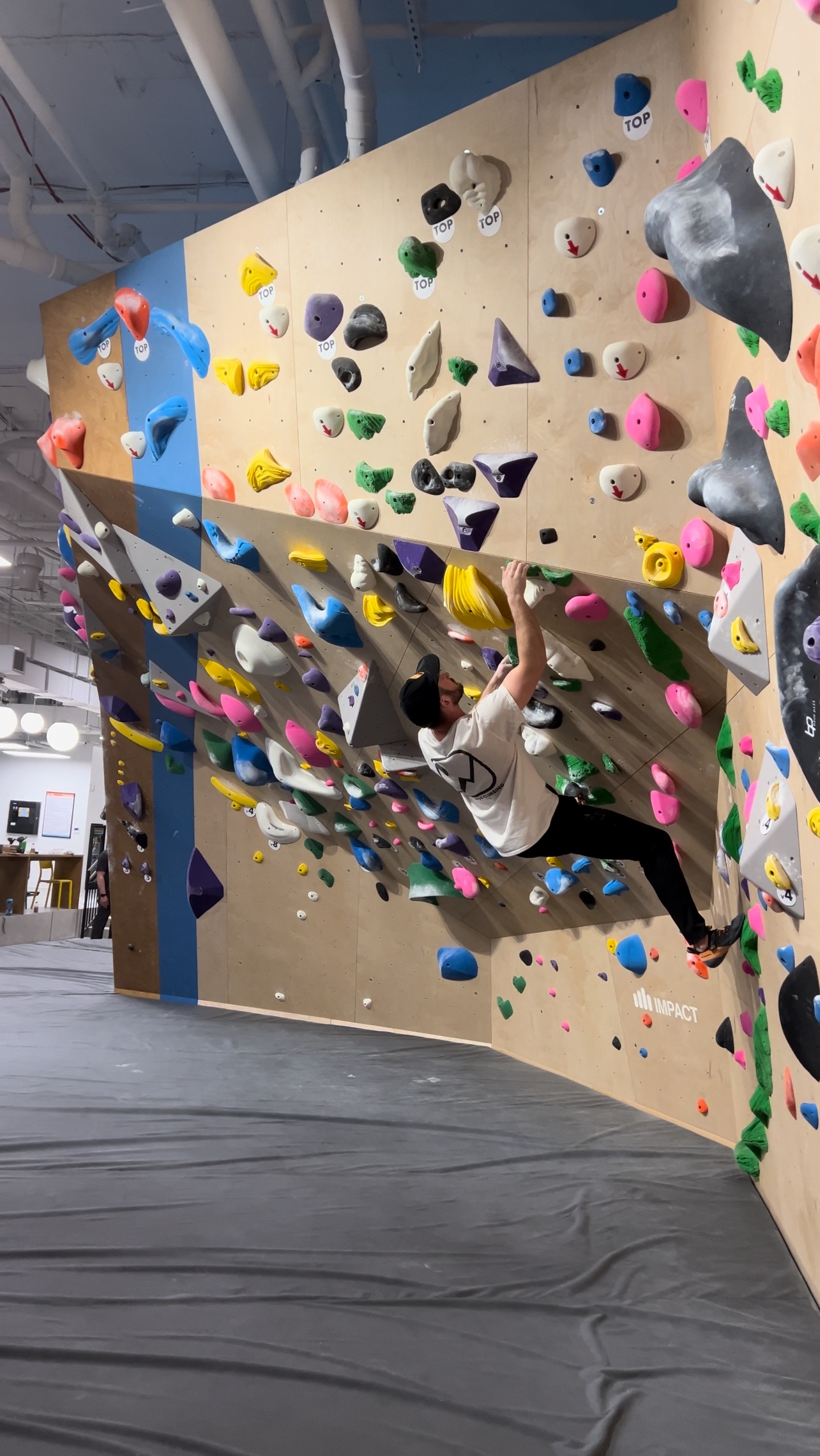
One of the biggest risks in bouldering is falling. Here are key tips for falling safely:
- Fall in stages: Aim to fall from your feet to your butt, then to your back.
- Avoid the wall: In a gym setting, fall away from the wall to avoid hitting holds or volumes.
- Protect your head: Don’t jerk your head back to prevent concussions or whiplash.
- Keep arms tucked: Avoid spreading your arms, as improper positioning can lead to serious injury.
Once you understand the fundamentals, practice falling from different heights and angles. Over time, your instinct to fall safely will improve, allowing you to confidently take on projects while minimizing injury risk.
Outdoor Bouldering: Extra Safety Considerations
This is a high-level overview—outdoor climbing comes with additional risks, so always seek formal instruction and climb with experienced partners.
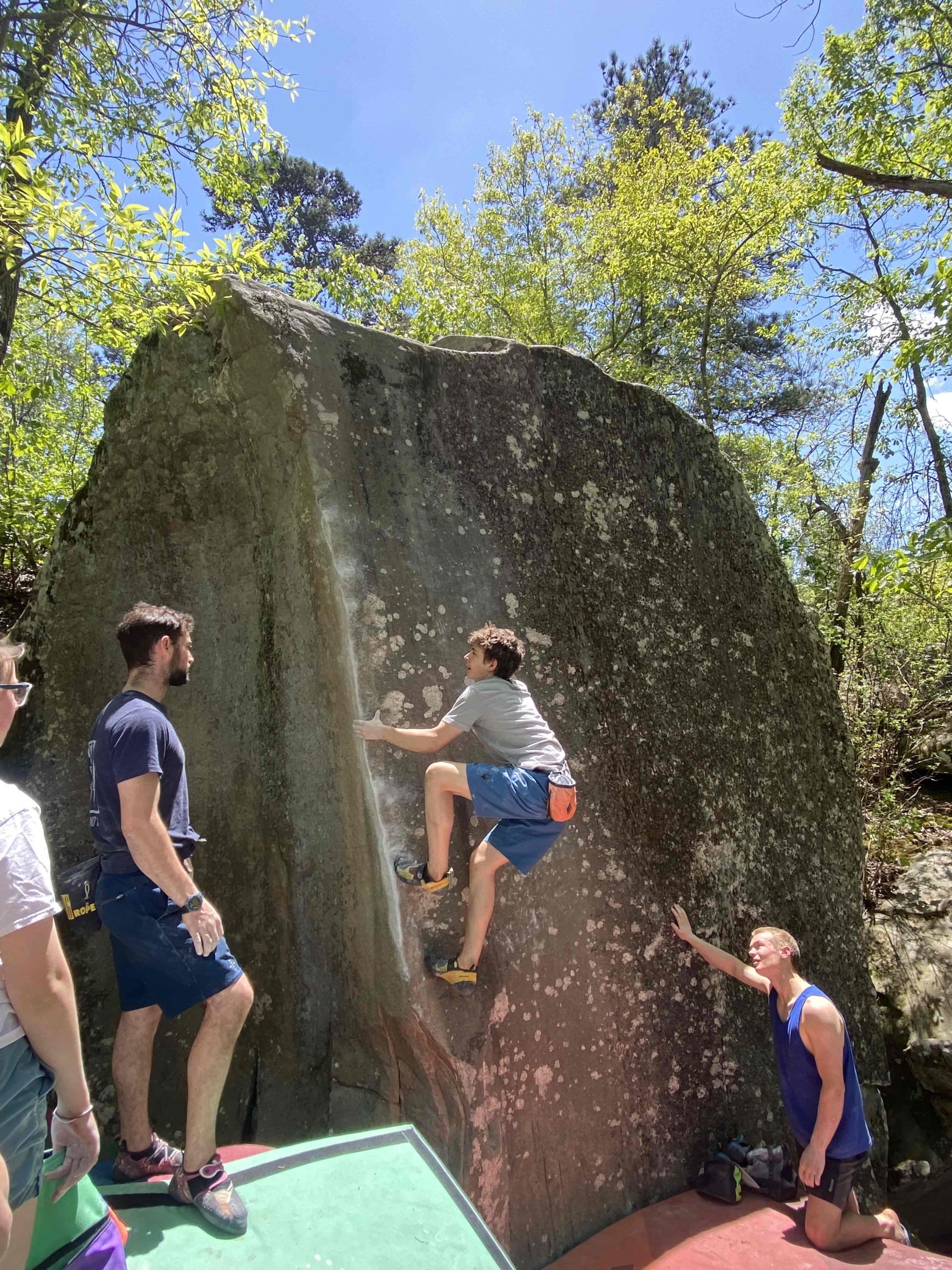
- Never climb alone: In case of injury, having someone to help is essential.
- Use crashpads (portable foam pads placed on the ground to cushion falls): Use enough crashpads to fully cover your fall zone, and reposition them as you move so they’ll actually be under you if you fall.
- Have a spotter: A spotter can help guide your fall onto the crash pad and move pads as needed. Remember the rule: “spoons, not forks.” Keep your fingers together to avoid injury if the climber lands on your hands.
Ropes Climbing Safety Tips in the Gym
When it comes to rope climbing, gear and communication are everything.
Gear Inspection: Quick Pre-Climb Check
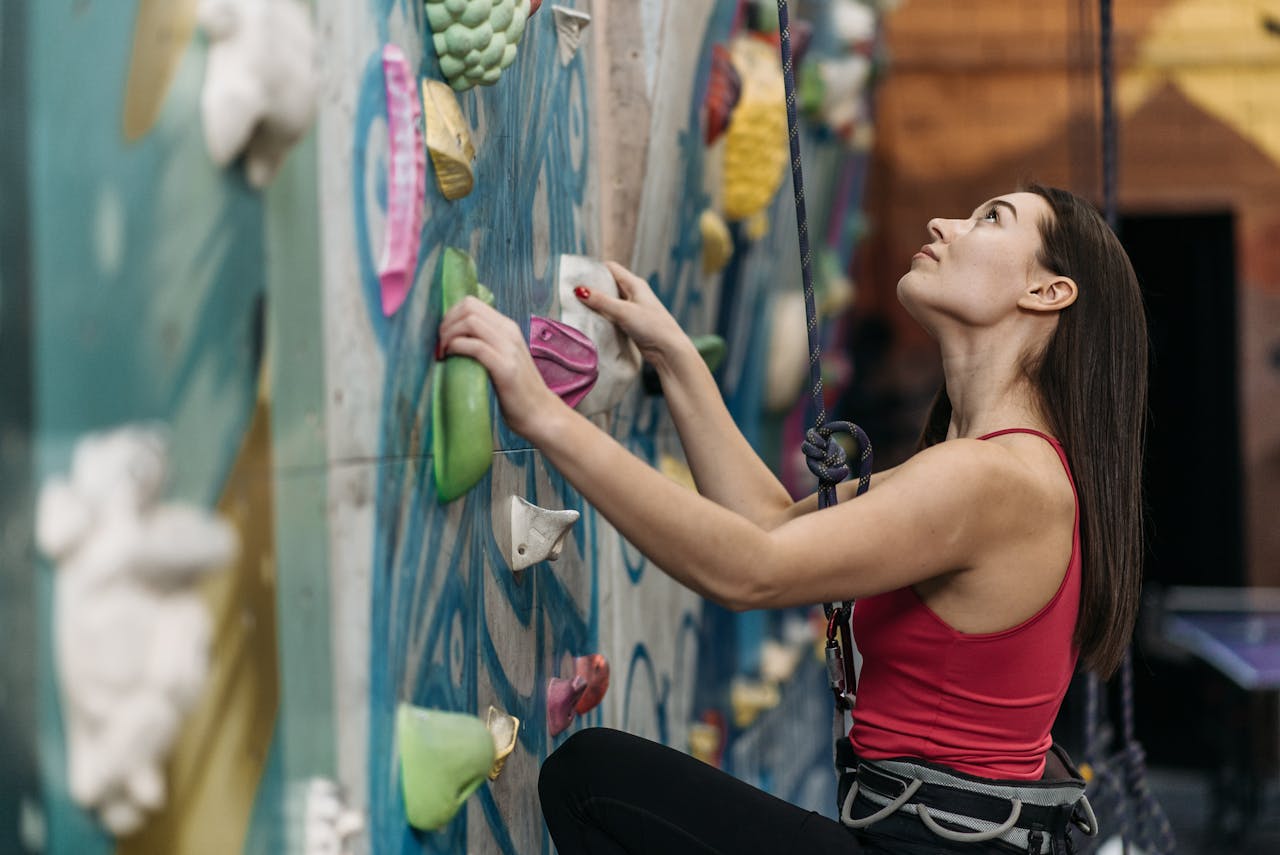
Before you leave the ground, run a quick gear check together.
Always check your:
- Harnesses: Inspect the manufacturer’s label and follow their retirement guidelines. Heavy, frequent use or visible wear may indicate that a harness should be retired sooner.
- Belay devices: Follow the manufacturer’s instructions and retire any device that shows wear, sharp edges, cracks, or deformation.
- Ropes: Check for abrasions or damage every time you climb. A badly worn rope can fail under load, so check for flat spots, fuzziness, or soft sections and retire any rope your gym or the manufacturer deems unsafe.
- Quickdraws: For outdoor climbers, replace the dogbone (the fabric part of a quickdraw that connects the two carabiners) when it shows signs of wear.
Follow the manufacturer’s and your gym’s retirement guidelines, and replace any gear that shows visible wear, damage, or deformation.
Partner Checks & Communication
Clear communication between climber and belayer is critical:
- Climber checks: Ensure the belay knot goes through both hard points, with no less than a fist between the knot and harness, and at least two fists of extra tail.
- Belayer checks: Confirm the belay device is set up correctly and the carabiner is attached to the belay loop.
Good communication ensures both parties are on the same page, especially during moments that require extra slack.
Whether you’re bouldering or sport climbing, safety is the foundation of climbing. While accidents can happen, mitigating risks is key. If you’re ever unsure about safety, ask. In the gym, staff are there to help you check knots, explain fall zones, and point you to classes that build your skills. Outdoors, climb with partners who treat safety as non‑negotiable and are happy to double‑check your setup. The goal isn’t to climb without fear—it’s to climb with enough knowledge and habits that fear doesn’t have to run the show.
Many gyms offer outdoor programs to help you transition to outdoor climbing safely. When you’re ready, climb with knowledgeable others to double-check your setup and get guidance.
- If you’re new to bouldering, ask staff where to safely practice falls.
- If you’re starting to rope climb, sign up for a belay class and follow your gym’s certification process.
- If anything about your gear or setup feels off, stop and ask for a second set of eyes.

