
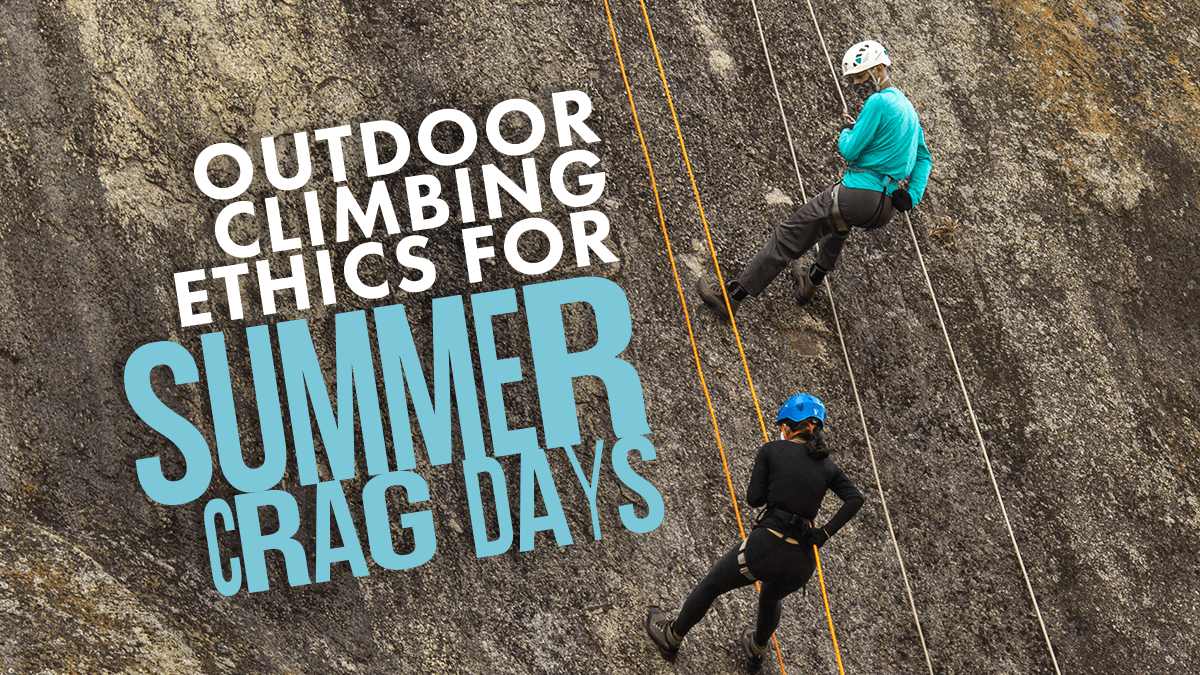
It’s finally that time of year again: the sun is out, the layers are coming off, and climbers are heading back outside. If you’re packing up your crash pad, crag snacks, and enough water for a full day out, it’s also worth reviewing the basics of outdoor climbing ethics.
Climbing outside comes with more freedom than the gym, but it also comes with more responsibility. The way you treat the rock, the trail, and the people around you has a direct impact on safety, access, and the long-term health of the places we climb.
Start with Leave No Trace
A good place to begin is with the Leave No Trace principles, which are widely recommended for protecting outdoor spaces. The seven principles are:
- Plan and prepare
- Travel and camp on durable surfaces
- Dispose of waste properly
- Leave what you find
- Minimize campfire impacts
- Respect wildlife
- Be considerate of other visitors
These principles help protect the land, but they also help protect you. Before heading to a crag, make sure you know how to get there, what conditions to expect, and what you need to manage risk well. That includes packing enough food and water, bringing the right gear, and knowing how to properly handle waste if facilities are not available.
At the end of the day, outdoor climbing asks you to be self-sufficient. Preparation is part of the ethic.
Respect private property and access rules
Access is one of the easiest things to take for granted—and one of the easiest things to lose.
When I was in college in Central Pennsylvania, two climbing areas came up all the time: Hunters Rocks and Donation Rocks. Hunters Rocks was on public land, but Donation Rocks was a different story. Access there depended on cooperation, negotiation, and care from the local climbing community, including the South Central Pennsylvania Climbers Association (SCPC).
That kind of access does not happen by accident. It exists because climbers and landowners have worked hard to build trust, and that trust can disappear quickly when people ignore boundaries, park where they shouldn’t, or treat private land like public space.
If a guidebook, sign, or local climber tells you not to park somewhere, don’t. If there’s a designated trail, use it. Those details may seem small in the moment, but they matter. Outdoor climbing access is a privilege, not a right, and once it’s gone, it can be incredibly hard to get back.
Keep your visual impact low
Chalk is useful, but it’s also one of the fastest ways to make a crag look trashed. Bright white tick marks may help on a send attempt, but they often stick around long after you leave.
If you use chalk or make tick marks, take a minute to brush the holds before you head out. It’s a simple habit, but it goes a long way toward keeping the rock looking natural and reducing your impact on the space.
This applies to more than just the route itself. Pets are part of the equation, too. If you bring a dog, keep it under control, keep it out of landing zones, and clean up after it. Not every climber is comfortable around dogs, and not every crag is a safe place for them to roam freely. Being mindful of the people and environment around you is part of being a good outdoor partner.
Keep noise and group size in check
Showing up with a big group can change the entire feel of a crag.
It makes sense to want to climb with friends, hang out, and have fun. But the outdoors is shared space, and not everyone wants to hear loud music or constant yelling while they’re trying to focus on a climb. If you’re with a larger group, spread out when possible, keep the volume reasonable, and pay attention to how much space you’re taking up.
A little awareness goes a long way. Good crag etiquette is not just about your own experience—it’s about helping everyone else have a good one too.
Protect the rock itself
No matter how badly you want to send your project, do not climb on wet rock.
This is especially important on softer rock types like sandstone, where moisture can make holds far more fragile. Climbing on wet rock can break holds, permanently change routes, and create unnecessary safety risks. If it rained recently, give the rock time to dry.
No project is worth damaging the rock, and no send is worth risking access or injury.
A little extra care
Outdoor climbing comes with a different level of responsibility than gym climbing. There’s no staff watching the space, no universal rulebook, and no guarantee that access will always be there.
Pay attention to where you are, how you’re affecting the space, and how your choices impact other climbers now and in the future. A little extra care from everyone helps keep these places open, safer, and more enjoyable in the long run.
Be safe, respect the crag, and have fun.

