
Three decades ago, indoor climbing was a way to train for outdoor projects in bad weather or between outdoor trips. Gyms were small, more akin to a backyard garage gym than the massive, luxury commercial gyms available today. There were a handful of walls with sparsely populated holds, and maybe a hangboard and some weights.
Today, training for outdoor projects when you’re stuck indoors is more than doable and doesn’t have to be boring. Advances in climbing technology, expansive climbing gyms with stellar route setting, and video footage of outdoor climbs make it easier than ever to train indoors and prepare to send your outdoor projects when the weather is good.
If you have an outdoor climbing project, but find yourself limited to indoor gym climbing for the foreseeable future, try one or all of these five ways to train.
Five Ways to Train for Outdoor Projects When You’re Stuck Indoors
1. Moonboard or Tension Board Sessions
As much as you can, train on a Moonboard or Tension Board. Both are notoriously challenging, but the holds and boulders mimic outdoor climbs more closely than a Kilter Board or commercial gym set.
Ben Moon, creator of the Moonboard, came up with the idea for a standardized training board based on the training shed, “The School Room,” he and other renowned British climbers used in the 1990s. All of the original MoonBoard users have gone on to climb double-digit outdoor boulders.
The Tension Board’s symmetrical setup can help train weaknesses between your left and right sides. The hold selection features a mix of wooden and dual-tex that can more closely mimic the varying textures of outdoor rock and increase the difficulty of the climbs. The hold selection also trains precision and good technique, two critical components for ticking off high grades outdoors.
2. Replicate Crux Moves
Try your best to replicate crux moves in the gym. Find similar holds and moves you can link together. A great option is to use a spray wall with an expansive palette of holds. If you’re friendly with the setting staff at the gym, talk to them about your project and ask if they would be willing to set a replica of the entire boulder or, at least, the crux move. Odds are it’ll be a fun venture for them.
3. Start a Hangboarding Routine
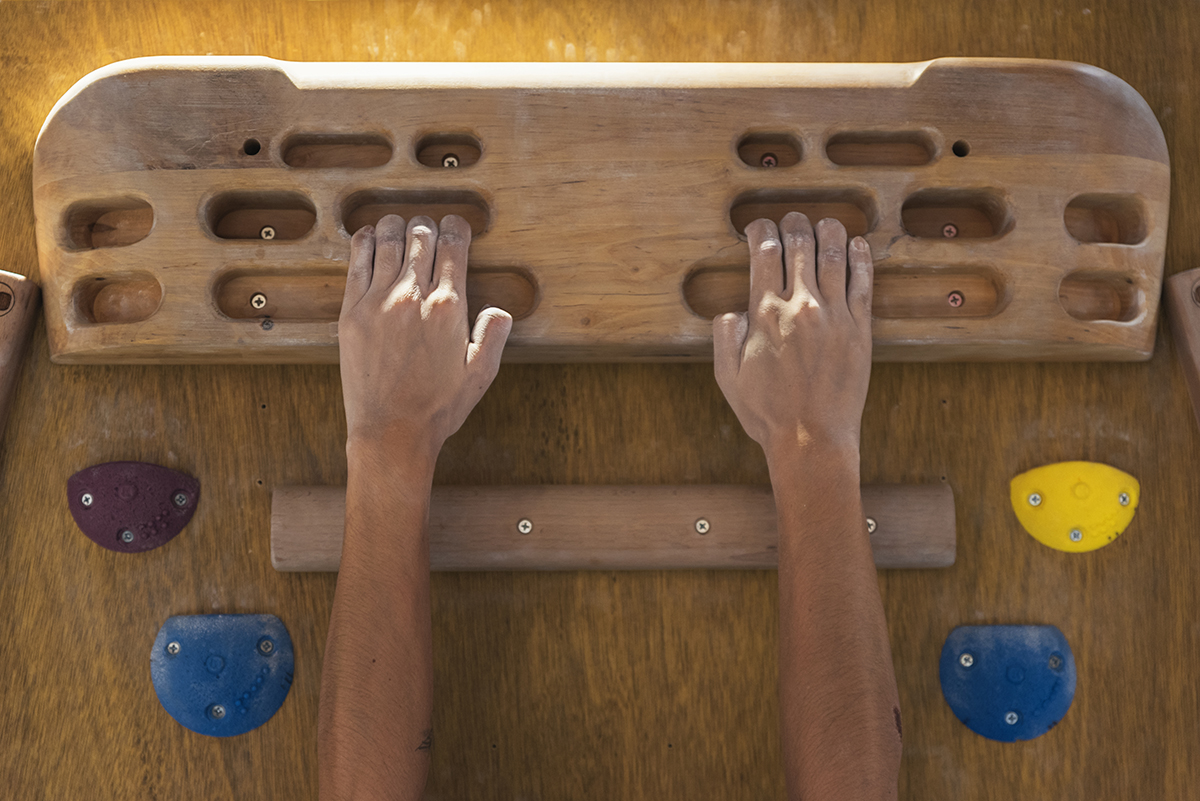
Outdoor climbing demands strong fingers. You’ll find slopers and pinches, but you’ll also find a multitude of crimps and pockets, challenging your finger strength. When it’s too cold to go outside, you can bulletproof your tendons and dial in your finger strength using a hangboard or with weighted pulls. There are a multitude of free hangboard routines floating around the internet, depending on your current level and desired frequency. When you find yourself snowed in or the gym is closed, hangboard sessions are easy to do at home. If you’re handy, you can craft your own hangboard or purchase one. Some great hangboard options are:
4. Study the Climb
Mental training for sending an outdoor project is equally important as physical training. Studying the ins and outs of the climb will help you feel prepared and confident when you get back out to the crag. Here are some of the best ways to study the climb:
- Watch videos of the climb.
- Read what others who have sent the climb have to say about the route
- Write down the sequence you will use
- Memorize your beta and any alternative betas you may try
5. Mental Preparation with Visualization
After you’ve studied the climb and committed the beta to memory, it’s time to mentally prepare for what it will feel like to try hard and, even, send the climb. Practice sitting and envisioning yourself doing all the moves on the climb. Even better, lie on the floor and mimic the hand and foot movements as you envision the problem. Where are the easy moves? Envision yourself resting, recovering, getting energy back. Where are the crux move(s)? Visualize yourself staying calm as you embrace the physical sensation of trying hard. Finally, visualize yourself sending the climb. What does it feel like both physically and mentally? It may feel silly at first, but trust the process. Adam Ondra used a similar technique to prepare for his ascent of “Silence,” 5.15d, the most challenging sport route in the world.
Being stuck indoors isn’t the end of the world. Thanks to the advances in climbing technology and the growth of the sport, there are many ways to make gains indoors that will directly translate to sending your outdoor projects. To physically prepare, start adding in Tension Board or Moonboard sessions, replicate the crux moves of your project, and find a hangboarding routine. Dial in your mental game by studying the climb and visualizing yourself on the climb. Come good weather or your next trip outdoors, you’ll be ready to conquer your projects despite being confined to the indoors.

